
One of the most critical pieces of equipment in rainwater harvesting is the storage tank. A suitable rainwater harvesting system can collect rainwater into the storage tank.
This article will explore the fundamental aspects of rainwater storage tanks, including their types, characteristics, advantages, and applications in rainwater harvesting.
Let’s get straight to the point:
What is a water storage tanks?
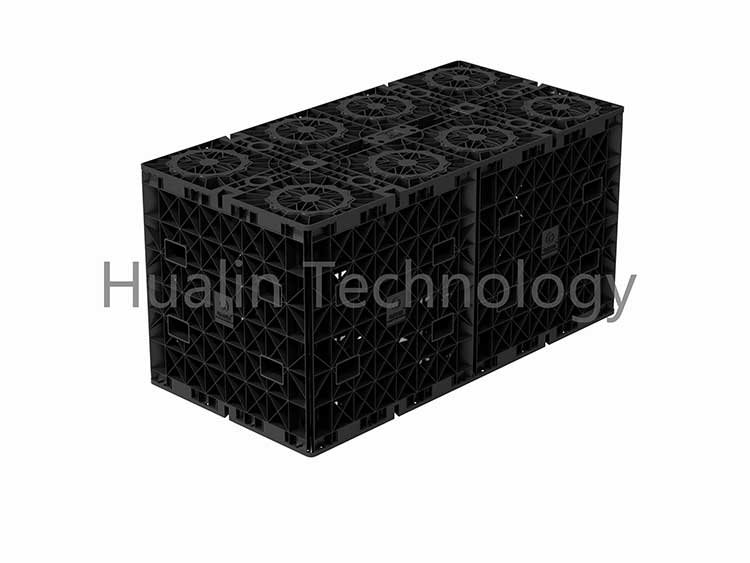
Water storage tanks are facilities used to store water resources, commonly found in urban, rural, and industrial areas. They are an effective water resource management tool, capable of storing large amounts of water to cope with droughts, water shortages, or emergencies.
The size and capacity of a water storage tanks depend on the amount of water that needs to be stored and the available space. Some water storage tanks are installed above ground, while others are installed underground.
Main types of water storage tanks
Depending on the material and the environment in which it is used, water storage tanks can be divided into various types, each with its own applicable scenarios.
PP Water Storage Tanks
PP water storage tanks are characterized by corrosion resistance and easy installation. They are commonly used in water storage projects. Due to the properties of PP material, they are not prone to rust, making them suitable for storing drinking water or domestic water.
Stainless steel water storage tanks
Stainless steel tanks are highly corrosion-resistant and robustly constructed, making them suitable for storing water requiring high hygiene standards. They are commonly used in industrial production, hospitals, and food processing facilities. Their advantages include good durability and simple maintenance, but they are also more expensive.
Concrete water storage tanks
Concrete silos are primarily used in large reservoirs or water supply systems as transfer stations, characterized by their large capacity and robust structure. Their construction requires consideration of seepage prevention and durability, making them suitable for long-term use. However, their disadvantages include a large footprint, long construction period, and high maintenance costs.
Features of water storage tanks
Good sealing
Preventing external pollutants, dust, insects, etc., from entering ensures water quality safety. Reducing water evaporation is especially important in arid or high-temperature regions.
Flexible capacity
Different volumes can be customized according to actual needs, ranging from tens of liters to thousands of cubic meters. Modular combination is supported for easy expansion.
Stable structure and high durability
It is rationally designed and can withstand internal water pressure and external environmental loads (such as wind pressure, earthquakes, etc.). It has a long service life and low maintenance costs.
Fully equipped
It is typically equipped with an inlet pipe, outlet pipe, overflow pipe, drain outlet, vent, level gauge, and maintenance manhole. An automatic control system (such as level control and remote monitoring) can be added for intelligent management.
Energy saving and environmental protection
It can be integrated with rainwater harvesting and greywater reuse systems to achieve water resource recycling. It reduces the instantaneous load on the municipal water supply network and plays a role in peak shaving.
Application
Building water supply and drainage system
High-rise buildings often have water storage tanks installed on the roof or in the basement to store municipal water supply and ensure daily water use (such as washing, flushing toilets, kitchens, etc.).
Fire protection system
Store emergency water for fire fighting to ensure that there is a sufficient water source for fire pumps to draw water in the event of a fire.
Agriculture and Irrigation
Farmland irrigation water storage: Collecting and storing rainwater in arid regions or during the rainy season for use in dry season irrigation. Livestock water: Providing clean drinking water for livestock, especially in remote areas without running water.
Household and civilian
Water outages and unstable water quality are common problems in rural areas or old residential communities.
Rainwater harvesting and greywater reuse
Rainwater harvesting system: Rainwater from the roof is collected through pipes to a storage tank, filtered, and then used for greening, flushing, and landscape water replenishment. Greywater storage: Treated greywater (such as laundry and bath water) is stored and reused, saving water resources.
Installation and maintenance
1.Pre-installation Preparation
Before installation, the foundation should be prepared to ensure the ground is level and firm. Choose a suitable location based on the tank size, away from pollution sources and easy for maintenance.
2.Installation Process
During installation, follow the design drawings step by step to ensure tight connections and leak-proof construction. For large water storage tanks, specialized hoisting equipment and teamwork may be required.
3.Maintenance and Cleaning
Regularly check the water tank’s seals, connections, and internal cleanliness. Plastic and stainless steel tanks can be rinsed with clean water to prevent bacterial growth. Concrete tanks require regular checks of the integrity of the impermeable layer.
4.Precautions
Avoid adding unknown substances to the water tank to prevent contamination. If storing drinking water, ensure the water source is clean and replace and clean the tank promptly. Repair any leaks or cracks immediately to avoid water waste and damage.
Conclusion
While water storage tanks may seem like a simple component of infrastructure, their design, material selection, and maintenance all affect the safety and efficiency of the water supply. Choosing the appropriate type of water storage tank and conducting scientific design and standardized maintenance based on actual needs can ensure the normal operation and long-term use of the equipment. Water storage tanks play a vital role in daily life and industrial production, and understanding their relevant knowledge helps improve the reliability of the overall water supply system.


