
PE pipe installation requires selecting the appropriate method based on pipe diameter and project requirements. This is a systematic process, including trench excavation and preparation, pipe connection and installation, and backfilling and protection.
In this way, the pipes can easily drain water, making the urban environment better.
In this guide, we will explore every key aspect of PE pipe installation:
Pipe Trench Excavation And Preparation
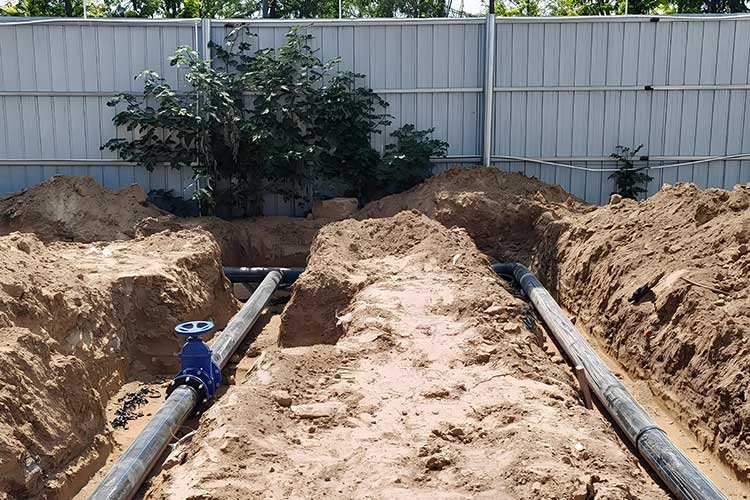
Excavation requirements and trench bottom treatment
(1) When excavating pipe trenches, a straight shape should be maintained as much as possible, and the width of the trench bottom should be determined according to the nominal diameter of the pipe, usually set at DN+0.30m. If the pipe needs to be connected underground, the width of the trench bottom at the interface should be appropriately increased, preferably not less than DN+0.50m, to ensure smooth installation and connection.
(2) The minimum soil cover depth for pipe burial should meet the following requirements:
① When buried under a roadway, it should not be less than 0.80m.
② When buried under a sidewalk, it should not be less than 0.60m.
Note: When crossing a roadway, if the design depth cannot be reached, steel sleeves should be laid for protection.
(3) When the pipe trench needs to turn, the turning angle should be controlled within a reasonable range, and the bending radius should also meet relevant regulations to ensure the smoothness and safety of pipe turns.
●Trench Bottom Treatment:
During manual excavation of pipe trenches, it is essential to ensure the trench bottom is flat and compacted, free of sharp objects. While some undulation is permissible at the bottom, it must be sufficient to stably support the pipes. If over-excavation occurs, backfilling and compaction must be carried out promptly.
●Material Preparation and Inspection
Before construction, carefully verify the model and specifications of the PE pipes and fittings to ensure they meet design requirements and are free from damage or cracks. Simultaneously, prepare the necessary cutting tools, hot-melt welding machines, pipe supports, and other essential construction tools.
Pipe Connection and Installation
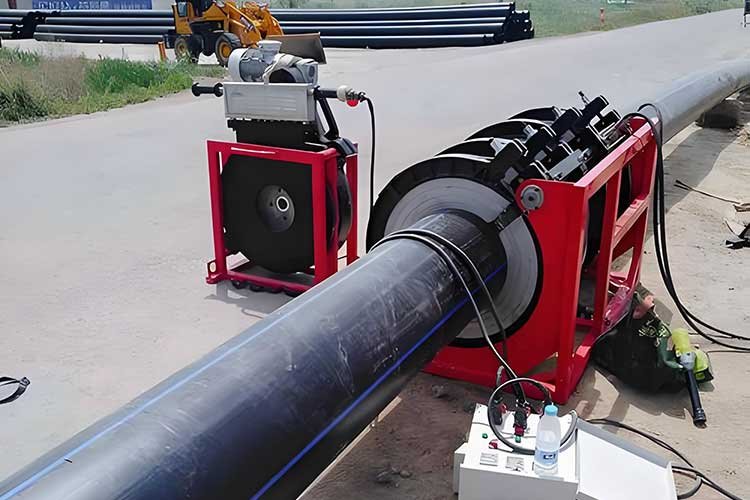
● Pipe Cutting and Connection
Use professional cutting tools to ensure smooth and straight cuts.
(1) Hot-melt connection (butt welding, socket welding)
● Construction steps:
1) Cut the pipe, ensuring the end face is flat and vertical.
2) Heat the pipe end using a dedicated heating plate, controlling the temperature between 200℃ and 220℃.
3) Quickly butt the pipe and apply appropriate pressure, maintaining the cooling time (refer to the manufacturer’s technical parameters).
● Quality control:
1) The flange should be uniform, without any incomplete welding or scorching.
2) The weld strength should be tested by tensile testing (sampling inspection).
(2) Electrofusion connection
● Construction points:
1) Scrape off the oxide layer from the pipe to ensure the contact surface is clean.
2) Use a dedicated electrofusion welding machine with stable input voltage, and ensure the welding time and current meet the specifications.
● Quality inspection:
Observe whether the observation hole of the electrofusion sleeve is protruding to ensure sufficient fusion.
(3) Mechanical Connections (Flanges, Clamps)
Suitable for temporary projects or connections with pipes of other materials.
Check that the sealing rings are intact and that the bolts are tightened evenly.
●Special Area Treatment
(1) Concrete supports made of C20 concrete should be installed at pipe bends, tees, reducers, fire hydrants, etc., and flanges and valves should be reinforced with brick supports.
(2) When connecting PE water supply pipes to metal pipes, valves, and fire hydrants, steel-plastic transition joints or special flange connections must be used.
(3) Air vents should be installed at pipe elevations or uphill sections to reduce the impact of mixed air and water pressure on the pipes.
Backfilling and Protection
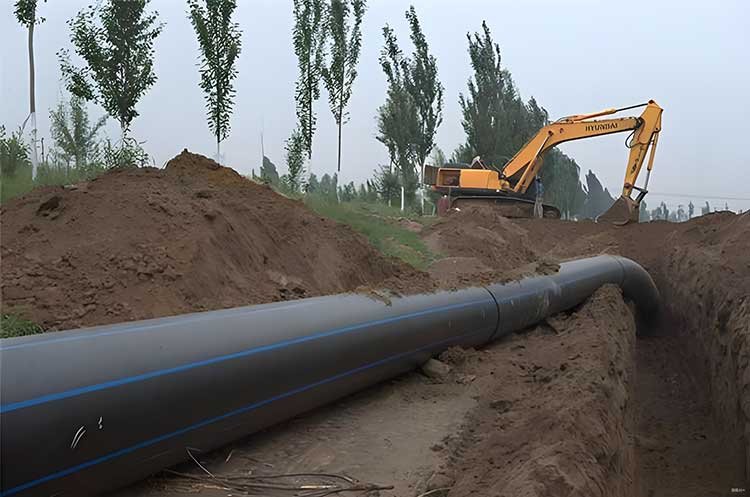
After the pipeline installation is completed and the concealed works are inspected and accepted, backfilling should be carried out immediately. Backfilling should comply with the following regulations:
(1) Prevent water accumulation in the trench from causing the pipeline to float. If water accumulates, it should be drained.
(2) When backfilling pipe trenches in areas with mixed rock and soil, clay or sand should be transported and backfilled to 200-300mm above the pipe, compacted, and then other miscellaneous soil should be backfilled.
(3) Backfilling must be done simultaneously from both sides of the pipe, compacting each layer as it is filled.
(4) Before the pipeline pressure test, the backfill soil should generally not be less than 500mm.
(5) Large-area backfilling after the pipeline pressure test should preferably be carried out when the pipeline is filled with water. The pipeline should not be left empty for extended periods after installation.
Conclusion
As you can see, PE pipe installation is of paramount importance in any project. However, you must choose the appropriate installation method and select the best solution.
Hualin can provide suitable PE pipes for your municipal engineering projects or projects, meeting all your needs.


